- June 24, 2026
Bathroom Renovation Plumbing in Roodepoort
Bathroom Renovation Plumbing in Roodepoort: What to Plan Before Tiles Go Down
Tiles make a bathroom look finished. Plumbing makes it work.
That is why the most important bathroom renovation decisions usually happen before the tiles arrive. Once floors and walls are closed up, every mistake becomes slower, messier and more expensive to fix. A shower trap in the wrong place, a toilet waste pipe that does not match the new pan, a mixer set too deep, poor drainage fall, weak water pressure or missed waterproofing detail can turn a good-looking bathroom into a frustrating repair job.
For Roodepoort homeowners, this matters even more because many properties combine older pipework with newer fixtures. A bathroom in Weltevredenpark, Florida, Helderkruin, Discovery, Constantia Kloof or Radiokop may have been renovated before, extended, patched, or adapted around existing walls and drains. Before tiles go down, the plumbing plan needs to be clear.
If you are planning bathroom renovations in Roodepoort, use this guide to brief your plumber, builder and tiler before the finishing work locks everything in place.
Start with the layout, not the tile sample
It is tempting to begin a bathroom renovation with finishes: tiles, taps, vanity colours, mirrors and lighting. Those choices matter, but the layout should come first.
Before buying fixtures, decide:
- Will the toilet stay where it is?
- Will the shower move or become larger?
- Will a bath be removed or added?
- Will the basin become a double vanity?
- Will mixers be wall-mounted or deck-mounted?
- Will the shower use a standard drain, channel drain or walk-in wet-room style?
- Will the shower screen, door swing or vanity drawers clash with the planned plumbing positions?
- Will the bathroom need access for future maintenance?
Every layout change affects plumbing. Moving a basin is usually simpler than moving a toilet. Moving a toilet may require a new waste route, trap change, floor chasing, venting checks or a raised floor solution. Moving a shower can affect drainage fall, waterproofing, screed depth and tile layout.
A plumber should check whether the desired layout is practical before the design is approved. A beautiful layout on paper can become expensive if the drains cannot fall correctly or if the new fixture positions clash with structural walls, beams or existing pipe routes.
Check existing pipework before committing to finishes
Many Roodepoort bathrooms have older copper, galvanised, PVC or mixed pipework behind walls and under floors. Some homes have neat original pipe routes. Others have been altered through years of small repairs, extensions and previous renovations.
Before closing walls, ask your plumber to inspect:
- Hot and cold supply lines.
- Visible leaks, corrosion or previous patches.
- Waste pipe sizes and routes.
- Shower, bath, basin and toilet connection points.
- Isolation valves.
- Water pressure at the bathroom.
- Signs of damp or past leaks near walls and floors.
- Whether old pipework should be replaced while access is open.
This is the moment to fix hidden weaknesses. Replacing a questionable pipe while the bathroom is stripped is far easier than finding a leak after tiling, cupboards and glass have been installed.
If the renovation reveals damaged or unreliable plumbing, use a qualified plumber in Roodepoort before the project moves into waterproofing and tiling.
Plan drainage falls before screeding and tiling
Water must be guided to the waste point. That sounds obvious, but many bathroom problems start with poor drainage falls.
In showers, the floor must fall toward the drain without creating puddles. In wet areas, the tiler and plumber need to coordinate the drain height, screed level, tile thickness and waterproofing system. A channel drain, centre waste or corner waste each affects the fall pattern differently.
Poor falls can cause:
- Standing water after a shower.
- Water running toward the bathroom door.
- Damp grout lines.
- Slippery floors.
- Mould-prone corners.
- Complaints that the shower "drains slowly" even when the pipe is clear.
- Trap or venting problems if the waste route is altered badly.
Drainage planning is not only about the visible floor. The waste pipe below must also have a proper route and fall. A shower may look correct from above but still drain poorly if the waste line is too flat, restricted, poorly vented or connected badly.
Before tiles go down, confirm that water will leave both the shower floor and the waste pipe as intended.
Coordinate waterproofing with plumbing penetrations
Waterproofing is one of the most important parts of a bathroom renovation, but it is also one of the easiest to compromise.
Every pipe through a wall or floor is a potential weak point. Shower mixers, bath spouts, basin wastes, toilet water points, floor drains, wall-hung toilet frames and concealed cisterns all need careful planning so the waterproofing can be applied properly around them.
The sequence matters:
- Strip out and inspect.
- Confirm layout and pipe routes.
- Complete rough-in plumbing.
- Pressure test where appropriate.
- Prepare surfaces.
- Waterproof wet areas.
- Allow required curing time.
- Tile.
- Fit off fixtures.
- Test again.
Problems happen when trades work out of sequence. If waterproofing is done before pipe changes are finished, it may be cut open again. If the plumber returns after tiling to move a fitting, the waterproofing layer may be damaged. If a shower screen is installed without considering the waterproofed threshold, water can escape into areas that were never designed as wet zones.
Good renovation planning gives each trade a clear order of work.
Confirm mixer positions and depths early
Modern bathrooms often use concealed mixers, wall-mounted taps, diverters, hand showers and rain heads. These look clean, but they are less forgiving than exposed fittings.
Before walls are closed, confirm:
- The finished tile thickness.
- The mixer installation depth.
- The height of the shower rose.
- The position of a hand-shower outlet.
- Whether a niche, shelf or glass panel will clash with pipework.
- Whether the shower screen and door swing still work with the mixer position.
- Whether the mixer is centred to the tile layout or the shower opening.
- Whether the hot and cold supplies are correctly oriented.
If a concealed mixer is set too deep or too shallow, the trim plate may not sit properly. If the shower rose is too low, the bathroom feels poorly planned. If a wall-mounted basin mixer is not aligned with the basin waste, the finish can look awkward even if the plumbing works.
Ask for a set-out check before plaster, board or tile adhesive hides the rough-in.

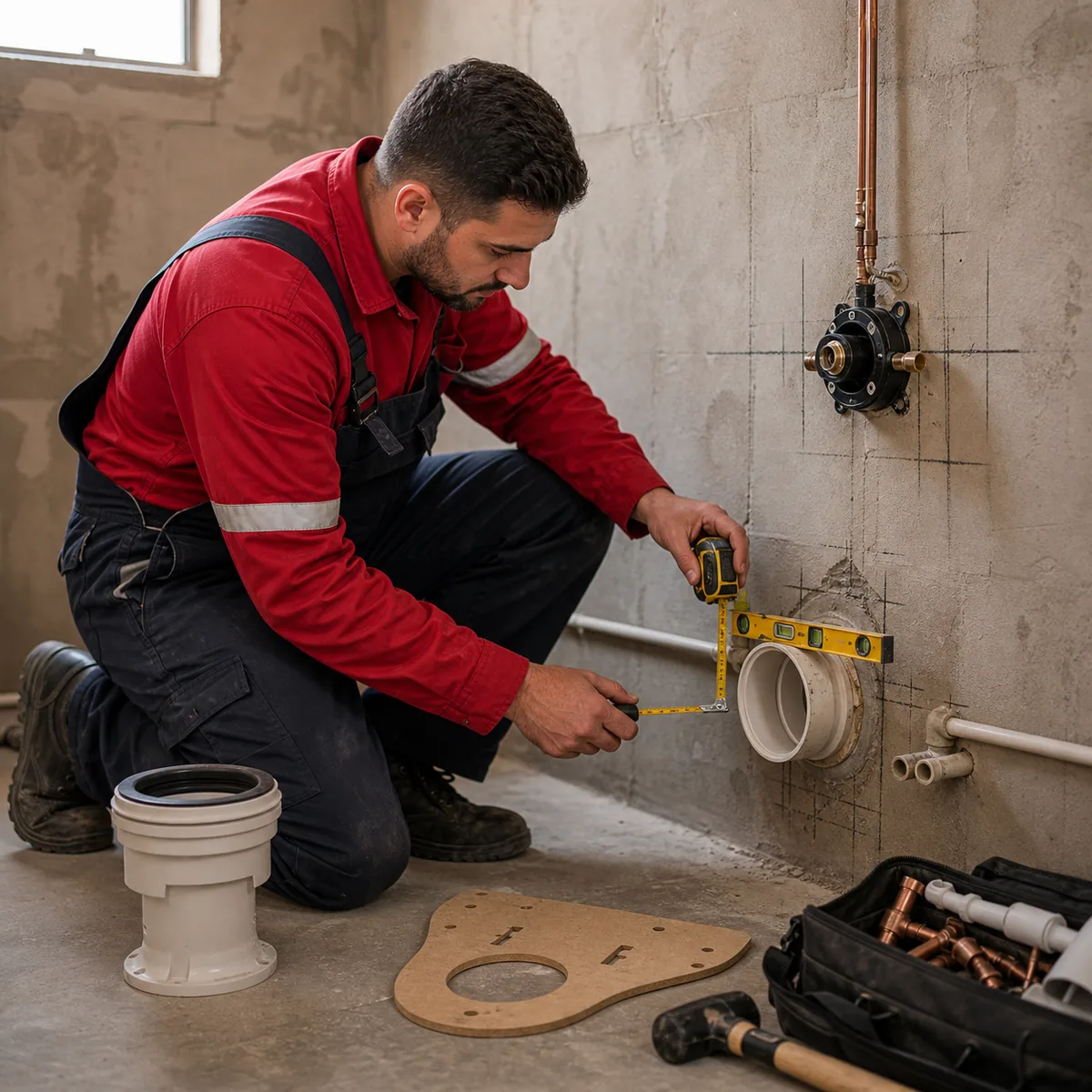
Toilet layout: check the set-out before buying the pan
Toilets are one of the biggest rework risks in a bathroom renovation. The toilet pan must suit the existing or planned waste position. If the set-out is wrong, the toilet may sit too far from the wall, clash with the door, rock on the tile, need an awkward connector or require floor changes that were not budgeted.
Before buying a new toilet, check:
- Whether the existing toilet uses an S-trap or P-trap.
- The distance from the finished wall to the waste point.
- Whether the floor level will change after screed and tiles.
- Whether the cistern will fit under a window or shelf.
- Whether a concealed cistern needs wall depth or service access.
- Whether the toilet has enough knee room and door clearance.
- Whether vanity drawers, skirting, tile thickness or boxing will affect the pan position.
- Whether an angle valve can be added for future maintenance.
Crusaders Plumbing's toilet installation in Roodepoort page is a useful reference for planning set-out, trap selection, waste alignment and clean finishes. Their toilet installation project in Weltevredenpark, Roodepoort also shows why neat fixture placement and functional testing matter after installation.
Do not forget water pressure and hot-water demand
A bathroom can have expensive fittings and still disappoint if the water pressure is poor or the hot-water system cannot keep up.
Before choosing mixers, shower heads or body jets, check:
- Current hot and cold water pressure.
- Whether pressure is balanced between supplies.
- Whether the geyser is large enough for the household.
- Whether long hot-water runs cause delays at the shower.
- Whether pipe insulation would help reduce heat loss.
- Whether existing pipe sizes suit the new fixture demand.
- Whether a pressure-control issue exists elsewhere in the house.
A rainfall shower may look appealing, but it needs enough flow to feel worthwhile. A double vanity may need better pipe planning than a single basin. A bath filler may expose weak hot-water delivery that was not obvious before.
If the bathroom renovation forms part of a larger home upgrade, ask the plumber whether the existing geyser and pipework can support the new usage pattern.
Decide where future access will be
Bathrooms often fail because everything is sealed beautifully and nothing can be accessed.
Think about future maintenance before the final design is approved. Concealed cisterns, wall-hung toilets, bath traps, mixer bodies, isolation valves and pump or pressure components should not be buried without a plan.
Ask:
- Can the toilet cistern be serviced?
- Can the bath trap be accessed?
- Are isolation valves reachable?
- Can a concealed mixer be repaired without breaking tiles?
- Can a leak be isolated quickly?
- Are access panels hidden neatly but still usable?
The goal is not to leave ugly openings everywhere. The goal is to design access intelligently so a minor future repair does not become a bathroom demolition.
Common renovation mistakes that cause rework
The most expensive bathroom plumbing mistakes usually happen before the bathroom looks finished.
Watch out for:
- Buying fixtures before checking set-outs and pipe routes.
- Moving a toilet without confirming drainage fall.
- Installing a walk-in shower without planning floor falls.
- Waterproofing before plumbing changes are complete.
- Tiling before pressure testing pipes.
- Setting concealed mixers at the wrong depth.
- Forgetting isolation valves.
- Choosing a vanity that blocks trap access.
- Forgetting that vanity drawers, shower screens and door swings need clear space around pipework.
- Ignoring old pipework because it is hidden.
- Assuming every shower drain style suits every floor depth.
- Letting different trades work without one coordinated sequence.
If any of these issues are caught before tiles go down, they can usually be fixed sensibly. If they are caught after the bathroom is finished, the repair often involves breaking new work.
What to inspect before tiling starts
Before waterproofing and tiling, walk through the bathroom with the plumber or contractor and check:
- All fixture positions are marked and approved.
- Hot and cold water points are in the correct places.
- Waste pipes are aligned to the chosen fixtures.
- Shower drain position and fall plan are confirmed.
- Toilet set-out matches the selected pan.
- Mixer bodies are installed at the correct depth.
- Pipes have been pressure tested where appropriate.
- No old leaks or suspect pipes remain hidden.
- Waterproofing details around penetrations are planned.
- Access points are agreed.
- The tiler knows the drain heights and falls.
- The client has approved any layout compromises before finishing begins.
- Door swings, shower screens and vanity drawers have been checked against the final plumbing positions.
This small checkpoint can save a lot of frustration.
How to brief your plumber before a Roodepoort bathroom renovation
A strong brief helps the plumber give better advice and a more realistic quote.
Before the site visit, gather:
- Photos of the current bathroom.
- A rough sketch or inspiration image of the new layout.
- Fixture specifications if already chosen.
- The age of the home, if known.
- Any history of leaks, damp, low pressure or slow drainage.
- Whether the bathroom is the only bathroom in the home.
- Whether the property is a house, townhouse, flat or rental.
- Whether body corporate rules or access restrictions apply.
- Your preferred timeline.
- Any non-negotiables, such as keeping the toilet in place or adding a walk-in shower.
The plumber can then flag what is straightforward, what needs inspection and what may affect cost or timing.
When to bring Crusaders Plumbing in
Call a plumber before the project reaches finishes if:
- You are moving the toilet, shower, bath or basin.
- You are installing concealed mixers or a wall-hung toilet.
- You are changing from a bath to a shower.
- You have old or mixed pipework.
- Water pressure is already poor.
- The bathroom has damp marks or musty smells.
- The shower or basin drains slowly.
- You need new isolation valves.
- You want a cleaner, more compliant fixture layout.
Crusaders Plumbing can help plan bathroom renovations in Roodepoort, inspect existing pipework, handle fixture changes and advise on plumbing repairs in Roodepoort before the walls and floors are closed.
Final advice: make the hidden work boringly correct
The best bathroom renovations feel effortless after they are finished. The shower drains properly. The toilet sits neatly. The mixer works smoothly. Hot water arrives as expected. There are no damp smells, no wobbling fixtures and no awkward access problems.
That result comes from planning the hidden plumbing before the visible finishes take over.
Before tiles go down, make sure the pipe routes, drainage falls, waterproofing sequence, pressure, fixture set-outs and access points have all been checked. A bathroom can always be made prettier later. Hidden plumbing is the part you want to get right the first time.
For practical help with bathroom planning, fixture installation or renovation plumbing, book a local plumber in Roodepoort before the tiling stage starts.
FAQs
Should I call a plumber before choosing bathroom tiles?
Yes, especially if the layout is changing. Tile choice affects finished floor and wall thickness, but the plumbing plan affects whether drains, mixers, toilets and fixtures will actually fit and function properly.
Can I move my toilet during a bathroom renovation?
Often yes, but it depends on the waste route, trap type, floor structure, drainage fall and available space. A plumber should check the set-out before you buy a new toilet or approve the layout.
Why is drainage fall important in a shower?
The shower floor and waste pipe both need to guide water away. Poor fall can leave standing water, damp corners, slippery tiles and complaints that the drain is slow even when it is not blocked.
When should waterproofing happen?
Waterproofing should happen after rough-in plumbing and surface preparation, and before tiling. It should not be cut open again for plumbing changes after it has cured.
Do concealed mixers need special planning?
Yes. Concealed mixers must be installed at the correct depth and position before the wall is closed. Tile thickness, trim plates, shower height and pipe orientation all matter.
What is the biggest mistake in bathroom renovation plumbing?
The biggest mistake is approving the visual design before confirming the plumbing. Layout, pipe routes, drainage, pressure, waterproofing and access should be checked before finishes are installed.
ADDRESS: 9 Magnolia Place, 960 Vale Rd, Weltevredenpark, Roodepoort, 1709
Phone: 082 529 1455
Google Business Profile | Facebook