Commercial Water Tank Installation Services in Bryanston

Commercial property owners in Bryanston, Johannesburg, must ensure that static water storage systems maintain a minimum pressure of 200kPa at the highest outlet to comply with SANS 10252-1 standards. Installing industrial-grade tanks mitigates the risk of intermittent municipal supply failures caused by aging infrastructure in the greater Sandton region.
Strategic Water Storage for Bryanston Business Parks
Bryanston businesses often face localized water shedding due to high demand in nearby Sandton and the northern Johannesburg corridor. Implementing a buffer system requires selecting tanks based on daily consumption patterns and floor area limitations.
Our team specializes in designing comprehensive plumbing maintenance and installation services for Bryanston facilities, ensuring every system is sized correctly. Proper sizing prevents stagnation and ensures that your fire suppression systems remain pressurized in line with local safety codes.
Addressing Spatial and Structural Constraints
Many office parks in Bryanston offer restricted footprint space for external infrastructure. Using vertical, slimline tanks with a high density polyethylene (HDPE) construction provides a 20-year UV-stabilized lifespan without encroaching on parking or access routes.
When ground space is unavailable, rooftop reinforcement analysis is required before installation. We assess the structural load-bearing capacity to ensure the building supports the weight of water, which sits at approximately 1,000 kilograms per cubic meter.
Pressure Management and Delivery Infrastructure
Gravity-fed systems often fail to meet the required pressure for commercial ablution facilities and kitchen equipment. Integrating a high-efficiency booster pump is standard practice to maintain consistent flow rates during peak operational hours.
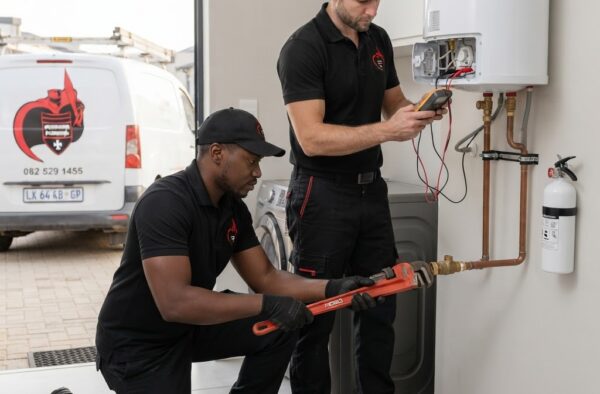
Advanced electronic leak detection monitoring systems in Bryanston should be integrated into your tank setup to provide real-time alerts. This prevents minor pipe fractures from turning into major supply loss, effectively safeguarding your operational costs.
Technical Installation Standards
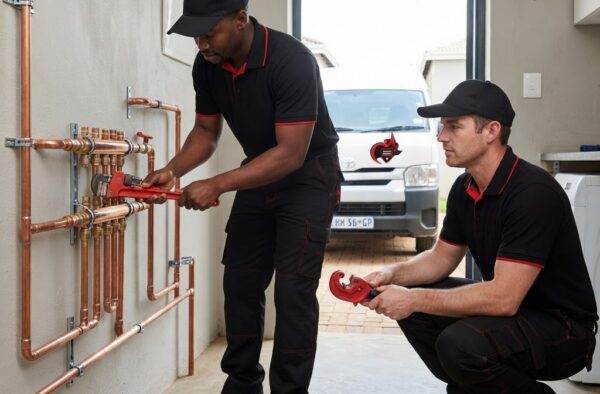
All piping from the tank to the building must utilize SANS-approved materials such as MDPE or copper. The installation must include a non-return valve to prevent backflow into the municipal supply, a requirement clearly outlined by the Department of Water and Sanitation guidelines for demand management.
| Component | Standard Requirement | Material/Specification |
|---|---|---|
| Pipe Material | SANS 10252-1 | Class 6 HDPE or Copper |
| Min Pressure | 200 kPa | Booster Pump Required |
| Storage Capacity | Variable | UV-stabilized Polyethylene |
| Valving | Non-return/Isolation | Full-bore Ball Valves |
Compliance and Regulatory Framework
Water harvesting in South Africa is governed by strict municipal bylaws. Before commencing, property managers must ensure that the installation does not violate the City of Johannesburg water service regulations concerning cross-connection contamination.
Failure to register your water storage facility or using non-compliant components may lead to fines or service suspension. We manage the documentation process for specialized industrial and commercial drain cleaning and plumbing compliance, ensuring your business stays operational throughout the approval cycle.
Key Takeaways for Property Owners
- Conduct a water audit to determine exact hourly peak demand.
- Ensure all booster pumps have dry-run protection to prevent motor burnout.
- Install bypass valves to allow for manual switching during maintenance cycles.
- Schedule bi-annual inspections of tank internal coatings and structural integrity.
Frequently Asked Questions
Why do commercial properties in Bryanston need booster pumps?
Municipal pressure in the Johannesburg North area often fluctuates below the 200kPa threshold required for multi-story office operations. A booster pump ensures a constant, reliable flow of water across all floors regardless of municipal supply levels.
What is the recommended tank capacity for a small office?
Capacity is typically calculated based on an allocation of 50 to 100 liters per employee per workday, plus a fire safety reserve. We recommend a baseline capacity that covers at least 48 hours of business operations to mitigate unplanned outages.
Are there specific legal requirements for rainwater tanks?
Yes, all installations must ensure that harvested water does not cross-connect with the municipal drinking water supply. You must install a proper backflow prevention device and verify your installation against local council building codes.
How often should I service my water storage system?
Professional inspections should occur every 6 to 12 months to check for bacterial growth, sediment buildup, and pump performance. Regular maintenance prevents the degradation of seals and ensures the longevity of your storage assets.
If you are ready to secure your business water supply, please call us for an assessment or send us a WhatsApp to discuss your installation requirements.