Why Professional Geyser Inspections are Vital in Fourways, Johannesburg
We are committed to offering Fourways, Johannesburg property owners practical plumbing guidance that protects buildings, budgets, and peace of mind. Fourways sits within the broader Sandton and Randburg axis, and one burst electric geyser in a Sectional Title complex can affect more than one ceiling, more than one unit, and more than one insurance claim.
Professional geyser inspections help homeowners, Body Corporate trustees, and managing agents identify corrosion, valve failure, pressure problems, and compliance risks before they become a 2:00 AM emergency. This article explains why routine checks are non-negotiable in Fourways, what a proper inspection includes, and how proactive maintenance helps protect neighbouring units, common property, and long-term asset value.
The Hidden Risk in Fourways High-Density Living
Fourways has a large number of apartment blocks, cluster homes, residential estates, and Sectional Title complexes, particularly around Fourways Mall, Lonehill, Broadacres, Craigavon, and nearby mixed-use nodes. In these properties, geysers are often installed in ceilings, cupboards, roof spaces, or enclosed service areas where early warning signs are easy to miss.
A burst geyser in a freestanding home is disruptive enough. In a multi-unit complex, however, the same failure can damage ceilings, built-in cupboards, electrical points, carpets, wooden floors, neighbouring units, and shared infrastructure. That is why complex maintenance should treat geyser health as a risk-management issue, not merely a convenience issue.
For property owners who need structured support, our SANS-compliant plumbing maintenance and repair services are designed to help identify potential failures before they escalate into avoidable water damage.
A geyser inspection is not only about hot water. It is about pressure control, safety, compliance, corrosion prevention, and reducing the risk of damage to surrounding property.
The Anatomy of an Invisible Geyser Threat
Electric storage geysers usually deteriorate from the inside out. The tank may look normal externally while internal corrosion, sediment, or pressure stress is steadily weakening the system. By the time staining, dripping, or ceiling moisture appears, the hidden damage may already be advanced.
The South African Bureau of Standards (SABS), which publishes SANS 10254 covering fixed electric storage water heater installations, sets out requirements for safety valves, correct discharge routing, drip trays, and pressure-control provisions. These are not decorative components. They help control pressure, temperature, overflow, and safe discharge. Where an installation does not meet these standards, the risks extend beyond the individual unit.
Common faults that remain unseen
- Internal corrosion: The steel tank can corrode when the sacrificial anode is depleted or when water conditions accelerate wear.
- Sediment build-up: Minerals and debris can collect inside the tank, reducing efficiency and increasing stress on components.
- Faulty pressure relief valves: A valve that does not discharge correctly can allow pressure to build beyond safe operating conditions.
- Drip tray and overflow faults: Poor drainage or non-compliant discharge pipes can turn a minor leak into ceiling damage.
- Electrical deterioration: Elements, thermostats, isolators, and wiring can show signs of overheating, moisture exposure, or wear.
Our professional recommendation is straightforward: do not wait for visible water damage before checking a geyser. A scheduled inspection gives owners and trustees a clearer view of the risks that are normally hidden above the ceiling board.
Why Fourways Plumbing Conditions Make Inspections Essential
Fourways has developed through several construction phases, from older residential streets and established estates to newer high-density complexes near retail and commercial nodes. This means neighbouring properties can have very different plumbing ages, installation quality, pressure-control arrangements, and maintenance histories.
The broader Northern Johannesburg suburbs can experience variations in municipal water pressure, estate-level pressure management, and local water hardness. These conditions may influence how quickly geyser components wear, particularly valves, anodes, elements, and internal tank linings. This is an expert observation based on plumbing maintenance patterns in the region, not a fixed rule for every property.
Fourways also shares design traits with nearby Sandton and Randburg developments, including ceiling-mounted geysers, compact service ducts, stacked apartment layouts, and shared drainage routes. For owners with properties across the area, our professional plumbing maintenance support across Randburg helps maintain consistency where similar infrastructure risks apply.
The age factor around Fourways Mall and surrounding estates
Many complexes around the Fourways Mall corridor and older surrounding streets are now at an age where original geysers, valves, copper pipework, pressure-control valves, or drainage arrangements may require expert review. Even where the geyser still heats water, the supporting installation may no longer be performing safely or efficiently.
Body Corporate committees should treat this as a planned maintenance item. A shared sense of purpose between trustees, owners, managing agents, and qualified plumbers can reduce emergency callouts and help protect common property.
Why DIY Checks or Neglect Can Become a Financial Liability
A geyser is a pressurised electrical water-heating system. DIY tightening, valve tampering, makeshift overflow routing, or ignoring recurring drips can create safety risks and make later repairs more expensive. A small leak that could have been addressed during a routine inspection may become a full ceiling collapse if left unchecked.
There is also an insurance consideration. Property insurers may ask for evidence that a geyser was maintained, installed correctly, or repaired by a competent professional. This is not legal advice, and each policy differs, but owners should understand that poor maintenance records can complicate claims after water damage. The Plumbing Industry Registration Board (PIRB) outlines why compliant plumbing work and proper certification matter, particularly when documentation is required after a water-related incident.
Where a geyser has already started leaking, or where hot water supply has become unreliable, it is more cost-effective to act before after-hours damage restoration becomes necessary. For urgent guidance after warning signs appear, you can call our team to discuss the next practical step.
Routine inspection versus emergency repair
- Routine inspection: Planned access, controlled water shut-off, documented findings, and lower disruption to residents.
- Emergency failure: After-hours callout pressure, water extraction, ceiling repairs, electrical safety checks, and possible damage to adjacent units.
- Complex-level neglect: Higher administrative pressure on trustees, managing agents, insurers, and affected neighbours.
We go above and beyond to help clients avoid the panic of preventable emergencies. A proactive inspection will not guarantee that a geyser can never fail, but it materially improves the chances of finding weak points before they cause major damage.
What a Professional Geyser Inspection Entails
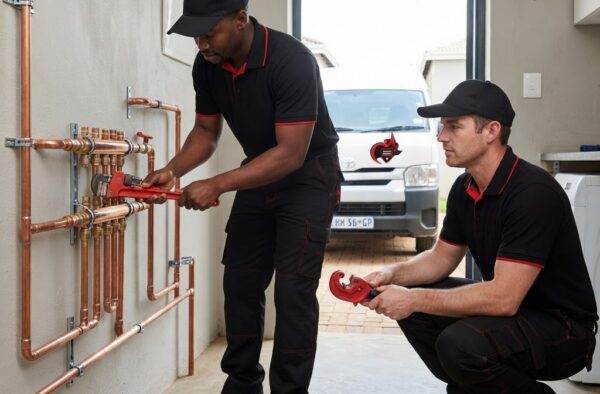
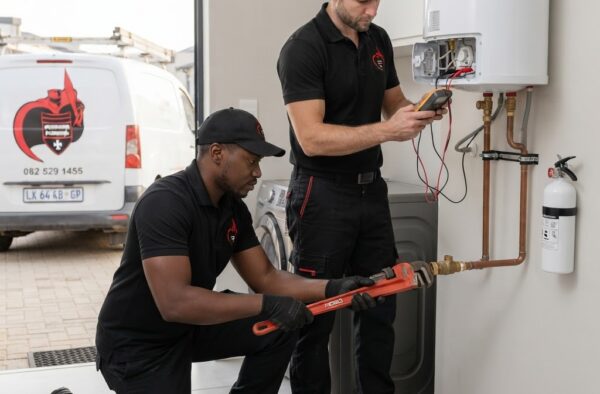
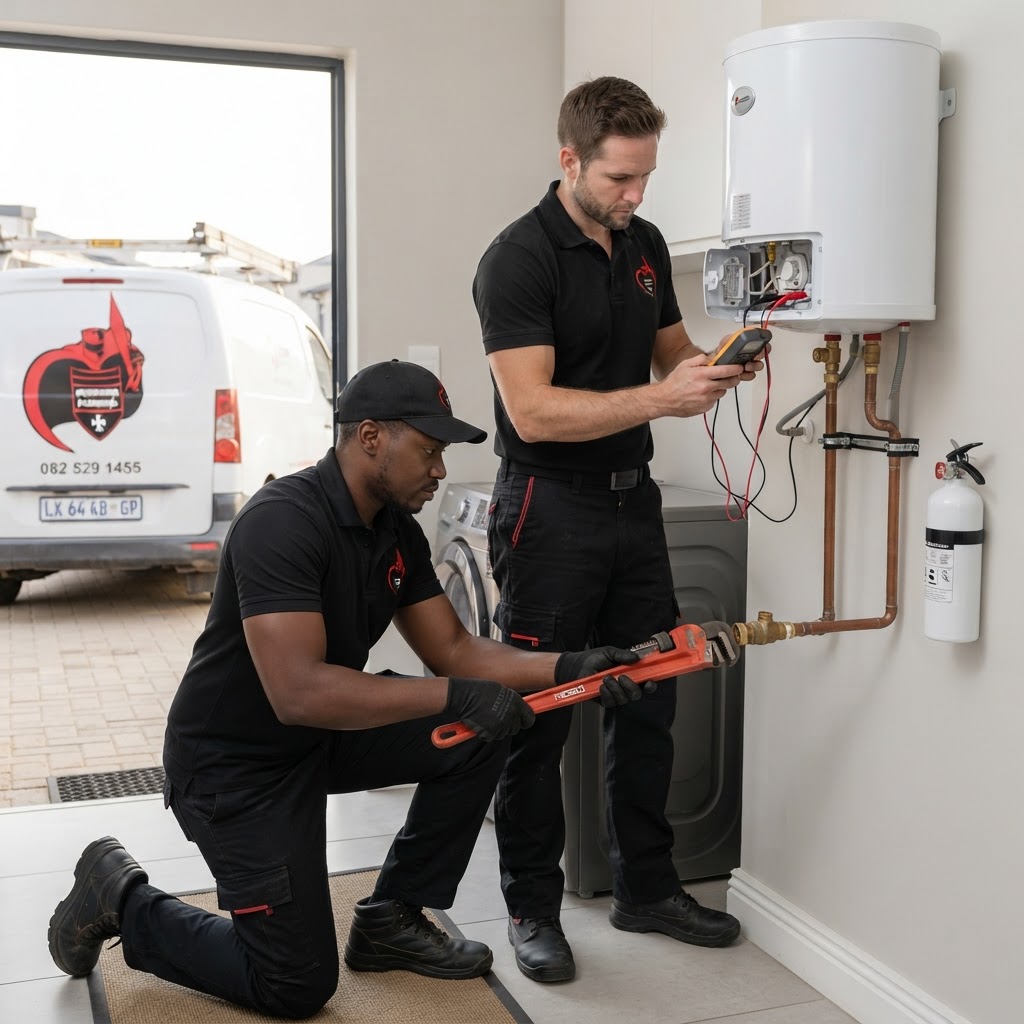
A comprehensive geyser inspection is more than a quick glance at the cylinder. Our technicians assess the installation, the visible pipework, the valves, the electrical condition, drainage provisions, and signs of previous leaks or non-compliant alterations.
SANS 10254 is the key South African standard for fixed electric storage water-heater installations. In practical terms, a professional inspection considers whether the geyser installation has the correct safety valves, drip tray, overflow discharge, vacuum breakers, pressure-control measures, and electrical safety provisions relevant to the installation. Owners who want a broader view of our service approach can visit our certified and customer-focused plumbing company profile for more detail on how we work with residential and commercial clients.
Key items we check during an inspection
- SANS compliance indicators: We assess visible installation details against applicable geyser safety and compliance expectations.
- Sacrificial anode condition: As an industry best-practice recommendation, anodes should generally be checked every 2 to 3 years, depending on water quality and system condition.
- Pressure relief valve operation: We check whether the valve appears suitable, correctly installed, and able to discharge safely.
- Thermostat and element condition: We look for overheating signs, erratic performance, corrosion, or moisture exposure.
- Drip tray and overflow route: We confirm whether leaks would be directed safely away from ceilings and living areas.
- Pipework and isolation points: We assess valves, joints, unions, and accessible pipework for leaks, corrosion, and wear.
If repair work or replacement becomes necessary, our electric geyser repair and preventative maintenance services help property owners address the fault properly rather than relying on temporary fixes that compound risk over time.
Peace of Mind for Body Corporates, Homeowners, and Managing Agents
Fourways property owners often manage more than a private plumbing issue. In Sectional Title environments, a geyser failure can involve trustees, neighbouring owners, tenants, maintenance contractors, insurers, and managing agents. Clear inspection routines reduce uncertainty and help everyone understand the condition of the system before a crisis occurs.
Crusaders Plumbing is a certified, customer-focused plumbing company providing professional, SANS-compliant repairs, maintenance, and installation services. We serve homeowners, Body Corporates, and business owners, and we are committed to offering practical inspection support that can meet your unique needs, whether for a single unit or a multi-unit maintenance programme.
Related services that support geyser risk management
Geyser inspections often connect with broader plumbing issues. A moisture mark near a ceiling may not always originate from the geyser tank itself, and pressure irregularities may point to valves or upstream pipework. In these cases, professional leak tracing, geyser repairs, and compliance checks should work together rather than being treated as separate problems.
If the unseen issue has already become an active leak or burst geyser, our team is available 24 hours a day. For non-emergency inspection planning or complex maintenance queries, you can send us a WhatsApp with the property details and the symptoms you have noticed.
Key Takeaways for Fourways Property Owners
- Fourways density increases risk: A burst geyser in an apartment block or complex can damage neighbouring units and common property.
- Most geyser problems are hidden: Corrosion, sediment, valve fatigue, and pressure faults often develop before visible leaks appear.
- Local conditions matter: Water quality variation, pressure fluctuations, and ageing installations in the Sandton and Randburg axis can affect geyser lifespan.
- Neglect can affect claims: Poor maintenance records and non-compliant work may complicate insurance discussions after water damage.
- Professional inspections support compliance: SANS 10254 checks, anode assessment, valve testing, and correct documentation help protect the property.
- Planned maintenance is calmer than emergencies: A scheduled inspection is usually less disruptive than an after-hours burst geyser response.
Professional geyser inspections give Fourways homeowners, trustees, and managing agents a practical way to protect buildings before hidden wear becomes expensive water damage. We deliver the promises we make by focusing on safety, compliance, and reliable plumbing performance, so your property is better prepared for everyday use and unexpected pressure events.
Securing your geyser system is not about over-servicing. It is about preventing the avoidable, documenting the important, and giving every owner in the building greater confidence that the plumbing infrastructure is being managed responsibly.