- June 24, 2026
Recurring Blocked Drains in Roodepoort
Recurring Blocked Drains in Roodepoort: When It Is More Than a Simple Clog
A blocked drain is annoying once. When it keeps coming back, it is a clue.
Many Roodepoort homeowners first treat a slow sink, gurgling toilet or smelly outside gully as a normal clog. They plunge it, pour in a shop-bought drain cleaner, run hot water, and the drain seems better for a week or two. Then the same line blocks again. At that point, the problem may not be the small blockage you can see. It may be a deeper issue in the pipe run.
Recurring blocked drains in Roodepoort are often linked to grease buildup, tree roots, older pipework, poor falls, cracked joints, collapsed sections, sand after storms, shared complex drainage, or foreign objects that keep catching debris in the same place. The right fix depends on what is happening inside the pipe. That is why repeat blockages need diagnosis, not guesswork.
If the blockage is urgent or affecting several fixtures, Crusaders Plumbing can assist with drain cleaning in Roodepoort and can advise whether rodding, hydro jetting, camera inspection or repair is the sensible next step.
Why blocked drains keep coming back
A simple clog usually has a simple pattern. One basin is slow, one shower trap is full of hair, or one kitchen sink has a soft grease blockage near the trap. Once cleared properly, normal flow returns.
A recurring blockage behaves differently. It may clear for a short time and then return in the same fixture, the same outside gully, the same bathroom group or the same kitchen line. Sometimes the symptoms spread: first the shower drains slowly, then the toilet gurgles, then an outside inspection chamber starts overflowing.
That usually means one of three things:
- The pipe was opened temporarily but not cleaned properly.
- Something inside the pipe keeps catching waste.
- The pipe itself has a structural or gradient problem.
In practical terms, a plumber is not only asking, "Where is the blockage?" They are asking, "Why is waste collecting there again?"
Common cause 1: Grease and kitchen waste
Kitchen lines are one of the most common sources of repeat blockages. Fat, oil, sauces, coffee grounds and food scraps may go down as liquid or small particles, but they do not stay harmless for long. As they cool, they cling to pipe walls. Soap residue, starch and fine food waste then stick to the greasy layer.
The result is a pipe that becomes narrower over time. Rodding may punch a hole through the middle of the buildup, which gives short-term relief. But if the pipe walls remain coated, the blockage builds up again.
This is common in family homes, rental properties, office kitchens, restaurants and takeaway shops. In commercial kitchens, grease load is heavier and the problem can return quickly if grease traps, waste habits and maintenance intervals are not managed properly.
Good drain cleaning should do more than create a temporary opening. When grease buildup is the problem, professional cleaning may need rodding first, followed by jetting to wash the line more thoroughly.
Common cause 2: Tree roots entering older drains
Tree roots are drawn to moisture. If an underground drain has a cracked joint, open connection or small leak, roots can enter the pipe and grow inside it. At first, they may only slow the flow. Later, they act like a net that catches toilet paper, wipes, fat and silt.
Roodepoort's older and leafy suburbs make this a realistic concern, especially where established gardens, boundary trees and older drainage materials sit close to sewer lines. The first clue is often a repeat blockage in the same outside drain or toilet line.
Rodding may break some roots loose, but it does not show whether the pipe is cracked or whether roots are likely to return. Hydro jetting can remove root masses and restore flow, but if roots entered through a damaged section, the long-term answer may include targeted pipe repair.
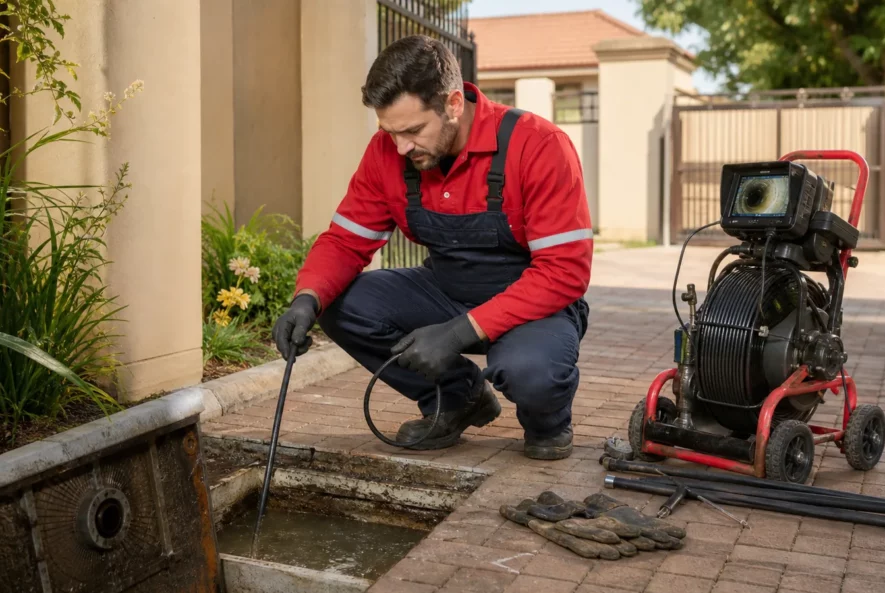
This is where a CCTV drain inspection in Roodepoort becomes useful. A camera can show whether the issue is roots, a crack, an offset joint, a collapsed section or heavy buildup.
Common cause 3: Poor pipe gradient or low points
Drains need the correct fall to carry wastewater away. If the pipe is too flat, has a belly, or has shifted over time, solids and silt can collect in the low point. Every flush or sink load passes through the same restriction, leaving a little more material behind.
This can happen after ground movement, paving work, renovations, previous trench repairs or ageing pipe supports. In some properties, a bathroom or kitchen may have been added later and connected into an older line with a less-than-ideal route.
The symptom is usually a blockage that returns after cleaning, often in the same branch line. If a plumber clears it and the line blocks again without an obvious misuse issue, the gradient should be investigated.
A camera inspection can help identify standing water, sagging sections and points where waste is not moving freely.

Common cause 4: Collapsed, cracked or offset pipes
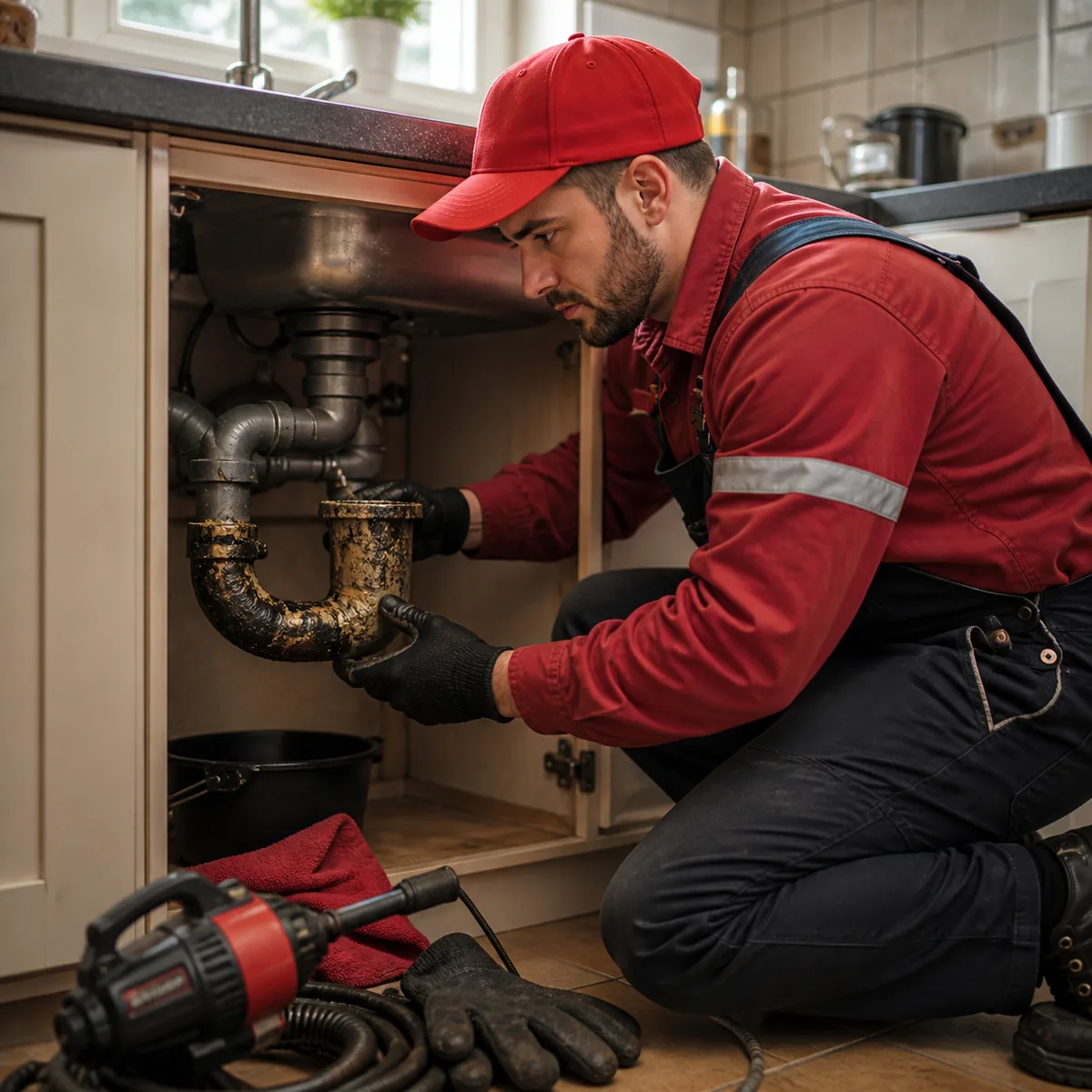
If a pipe is cracked, crushed, offset at a joint or partially collapsed, debris will catch at that point. The drain may still work after cleaning, but it remains vulnerable because the pipe shape is wrong.
Signs that may point to pipe damage include:
- The same drain blocks repeatedly.
- More than one fixture is affected.
- There is a foul smell outside or near a gully.
- Water appears where it should not.
- The blockage returns quickly after professional cleaning.
- Soil near the drain stays wet.
- Paving dips or shifts near a drainage route.
Not every repeat blockage means a collapsed pipe. But if cleaning does not hold, the condition of the pipe needs to be confirmed. A camera inspection helps avoid unnecessary digging by showing the exact fault location.
If damage is confirmed, Crusaders can advise on pipe repair in Roodepoort instead of repeated temporary unblocking.
Common cause 5: Foreign objects and flushable wipes
Some blockages come down to what entered the drain. Wet wipes, sanitary products, nappies, cotton buds, cloth, toys, building rubble and excess toilet paper can lodge in bends or inspection points.
The word "flushable" is misleading in many real plumbing systems. A product may pass through the toilet pan but still catch further down the line, especially in older pipework or long runs with existing buildup.
Foreign objects can also be left behind during building work. Tile adhesive, grout, cement washout, rubble and plastic packaging should never enter drains, but renovation sites are a common source of unexpected blockages.
If the object is near the trap, it may be removed quickly. If it is lodged deeper in the system, professional equipment is safer than forcing rods blindly.
Common cause 6: Shared complex drains and high-use lines
In townhouses, flats, office parks and small retail properties, a blocked line may not belong to one fixture only. Several units can feed into a shared stack or underground run, which means one obstruction can show up as symptoms in more than one bathroom, kitchen or outside gully.
This is where symptom mapping matters. If one basin is slow, the issue may be local. If several fixtures or units are affected, the blockage may sit further downstream. Body corporates, landlords and tenants should record which units are affected, when the symptoms started and whether any maintenance or building work happened recently.
Commercial kitchens and staff kitchens also place heavier demand on drains. Grease, coffee grounds, food scraps and mop water can build up faster than in a normal household line. For these sites, scheduled cleaning can be cheaper and less disruptive than waiting for a Friday-night backup.
When rodding is enough
Mechanical rodding is often the first practical step for a straightforward blockage. It can be effective when:
- The blockage is soft and close to an access point.
- The problem is isolated to one fixture or short drain run.
- There is no history of repeated blockages.
- There are no warning signs of pipe damage.
- The line clears fully and flow remains normal.
Rodding is useful for immediate relief, but it is not always a full clean. If the blockage is grease, sludge or roots along a longer run, rodding may only create a temporary pathway through the obstruction.
That is why a once-off blocked basin is different from a kitchen line that blocks every month.
When hydro jetting makes sense
Hydro jetting uses high-pressure water to clear the inside of a drain. It is often the better option when the problem is stubborn, heavy or repeated.
It may make sense for:
- Grease buildup in kitchen lines.
- Sludge and soap buildup in long pipe runs.
- Sand and silt after storms.
- Root intrusion where the pipe condition allows jetting.
- Commercial drains that carry heavier waste loads.
- Blockages that return after basic rodding.
The benefit is that jetting cleans the pipe walls more thoroughly than simply punching through the blockage. For recurring blocked drains in Roodepoort, that can mean a longer-lasting result.
However, jetting should be matched to the pipe. Very brittle, collapsed or badly damaged sections may need inspection before high-pressure cleaning. A responsible plumber will consider access, pipe material, condition and blockage type before choosing the method.
When CCTV drain inspection is worth it
A CCTV drain inspection is not always needed for a first-time, simple blockage. It becomes valuable when the problem keeps returning or when the symptoms suggest a deeper fault.
Consider a camera inspection when:
- The same drain blocks more than once.
- Several fixtures drain slowly at the same time.
- Toilets gurgle when nearby basins or showers are used.
- Outside gullies overflow.
- There are foul odours with no obvious cause.
- A blockage returns soon after cleaning.
- You suspect roots, cracks, a collapsed section or poor fall.
- You are buying or renovating a property and want to understand the drain condition.
The main advantage is certainty. A camera can show the plumber whether the line needs cleaning, jetting, repair or a more careful investigation. It also helps locate the exact problem area, which reduces unnecessary digging.
What not to do when drains keep blocking
Repeat blockages are frustrating, but some DIY responses can make the situation worse.
Avoid harsh chemical drain cleaners when symptoms persist. Many are corrosive and can cause serious burns or eye injuries if splashed. They may also leave dangerous liquid sitting in the blocked pipe for the plumber who opens the line. Most importantly, chemicals do not fix roots, collapsed sections, poor pipe falls or deep grease buildup.
Avoid repeated plunging if wastewater is rising elsewhere. If plunging a toilet makes water come up in a shower or outside gully, the blockage may be further down the line. Forcing pressure into the system can push dirty water into places you do not want it.
Avoid forcing DIY rods into a drain when you do not know the route. Rods can detach, jam or damage older fittings if used incorrectly.
Avoid continuing to use water when an outside drain is overflowing. Every additional flush, shower or sink load adds more wastewater to the blockage.
Avoid ignoring sewer smells. Odours can indicate trapped waste, a dry trap, poor venting, a cracked line or a blocked drain. If the smell comes back after cleaning, it deserves a closer look.
Safe steps homeowners can take before calling
If you suspect a blocked drain, take a few simple steps:
- Stop using the affected fixture.
- If more than one fixture is affected, stop using water in that area.
- Keep children and pets away from overflow water.
- Do not touch wastewater with bare hands.
- Remove visible leaves or debris from an outside grate if it is safe.
- Take photos of the affected drain, gully or overflow.
- Note which fixtures are slow, gurgling or backing up.
- Check whether neighbours or other units are also affected.
- If the issue appears municipal, log the sewerage fault with the City of Johannesburg and keep the reference number.
For a property-side blockage, contact a qualified plumber in Roodepoort and explain whether this is the first incident or a repeat problem.
What details to send when booking
The more specific your symptoms, the faster the plumber can choose the right equipment.
Helpful details include:
- Your suburb or nearest main road.
- Which fixture blocked first.
- Whether toilets, showers, basins or outside gullies are affected.
- Whether wastewater is overflowing outside.
- How often the problem has happened.
- Whether anyone recently used drain chemicals.
- Whether there are large trees near the drain route.
- Whether renovations or paving work happened recently.
- Photos or short videos of the affected drain or gully.
- Whether the property is a home, complex, rental, restaurant, office or retail space.
- Whether neighbouring units or shared drains are affected.
If this is a repeat blockage, say so clearly. That changes the job from "clear the clog" to "find out why this keeps happening."
How a plumber diagnoses a recurring drain blockage
A proper diagnostic approach usually follows a sequence:
First, the plumber listens to the symptoms. Which fixtures are affected? Where does water appear? How quickly does the blockage return?
Second, they check access points such as traps, gullies, inspection eyes and manholes. This helps narrow down whether the issue is local to one fixture or sits deeper in the drainage system.
Third, they choose a clearing method. A soft obstruction may be rodded. A heavy grease or sludge line may need jetting. If there are signs of damage or recurrence, CCTV may be recommended.
Fourth, they confirm flow. Clearing a blockage is not complete until the line drains properly.
Finally, they explain the cause and prevention plan. That might be better kitchen habits, scheduled maintenance, grease-trap cleaning, hydro jetting intervals, root monitoring or targeted repair.
Final advice for Roodepoort property owners
If a drain blocks once, it may be a normal household nuisance. If it blocks repeatedly, treat it as information. Something in the system is causing waste to collect, roots to enter, grease to cling, water to slow down or debris to catch.
The aim is not to overreact. It is to stop paying for the same temporary fix.
For recurring blocked drains, Crusaders Plumbing can inspect the symptoms, clear the immediate blockage and advise whether drain cleaning in Roodepoort, hydro jetting, CCTV inspection or pipe repair is the right next step.
FAQs
Why does my drain keep blocking after it has been cleared?
The drain may have been opened temporarily without removing the deeper cause. Grease, roots, pipe damage, poor fall or a foreign object can all make a blockage return.
Is hydro jetting better than rodding?
It depends on the blockage. Rodding is useful for soft, local obstructions. Hydro jetting is better for heavy grease, sludge, roots and repeat blockages because it cleans more of the pipe wall.
When should I book a CCTV drain inspection?
Book a camera inspection when a blockage returns, affects multiple fixtures, causes odours, creates outside overflows or suggests roots, cracks, collapsed pipes or poor drainage falls.
Are chemical drain cleaners safe for recurring blocked drains?
They are not a good long-term answer. Harsh chemicals can damage seals and pipes, create safety risks, and rarely fix roots, collapsed sections or pipe gradient issues.
Can tree roots be removed from drains permanently?
Roots can often be cleared, but they may return if the pipe remains cracked or open at a joint. CCTV inspection helps confirm whether repair is needed after cleaning.
Who should I call if the sewer problem is outside my property?
If it appears to be a municipal sewerage issue, log it with the City of Johannesburg and keep the reference number. If the blockage is on your property side or you are unsure, a plumber can help identify the affected section.
ADDRESS: 9 Magnolia Place, 960 Vale Rd, Weltevredenpark, Roodepoort, 1709
Phone: 082 529 1455
Google Business Profile | Facebook